
Sake Crafted by a Man Whose Dreams Never End: Kamoshibito Kuheiji
Before getting into the story, this may seem out of the blue, but Aichi Prefecture took first place in our recent Sakagura Miyamoto Podcast, Episode 9, featuring “Five Cities I’d Want to Live in Just for the Sake!”
With my heartfelt congratulations (?), let’s begin the story of a brewery in Aichi Prefecture.
At the oldest sake brewery in Nagoya, Aichi Prefecture, Mr. Kuno, the fifteenth generation to carry on the family business, crafts the incredible sake Kamoshibito Kuheiji.
The brewery’s influence reaches all the way to France, where it produces wine under the name Domaine Kuheiji in Burgundy.
I first learned about this wine in 2022. The story takes us back to my time in Korea.
While I was living there, I once introduced an acquaintance who had never tried sake to Kamoshibito Kuheiji alongside Mimuro Sugi from Nara Prefecture, and we drank them together. That was when this acquaintance told me about the wine Kuheiji makes.
Having invested considerable time and money in wine, this was someone whose words I listened to closely.
A few years later, there it was: a bottle of Domaine Kuheiji sparkling wine in the basement cellar of a wine shop in Okinawa.
At around ¥6,000, it certainly wasn’t cheap. But it was an ambitious venture into wine by a sake brewery, and I had that acquaintance’s recommendation in mind. Maybe I’d buy a bottle. That was the thought.
The result of that choice? A cheer.
It was a sparkling wine that suited my taste perfectly, one I wanted to recommend to others.
I hadn’t written down any tasting notes, so describing the taste now is difficult. But I wanted to try Kuheiji’s red and white wines too, so I returned to the shop.
Only to hear the tragic news that the only Kuheiji they carried was the sparkling wine…
That disappointment prompted me to take another look at Kuheiji and became the driving force behind today’s article.
Yes.
As you’ve probably guessed, today we’ll explore Nagoya’s oldest sake brewery, the maker of Kamoshibito Kuheiji (醸し人九平次) in Aichi Prefecture.
History
1. From the Brewery’s Founding to the Birth of Kamoshibito Kuheiji: From Mass Production to Quality-Focused Brewing
The story goes back roughly 400 years to 1647, when Banjo Jozo (萬乗醸造) was established in Nagoya, Aichi Prefecture.
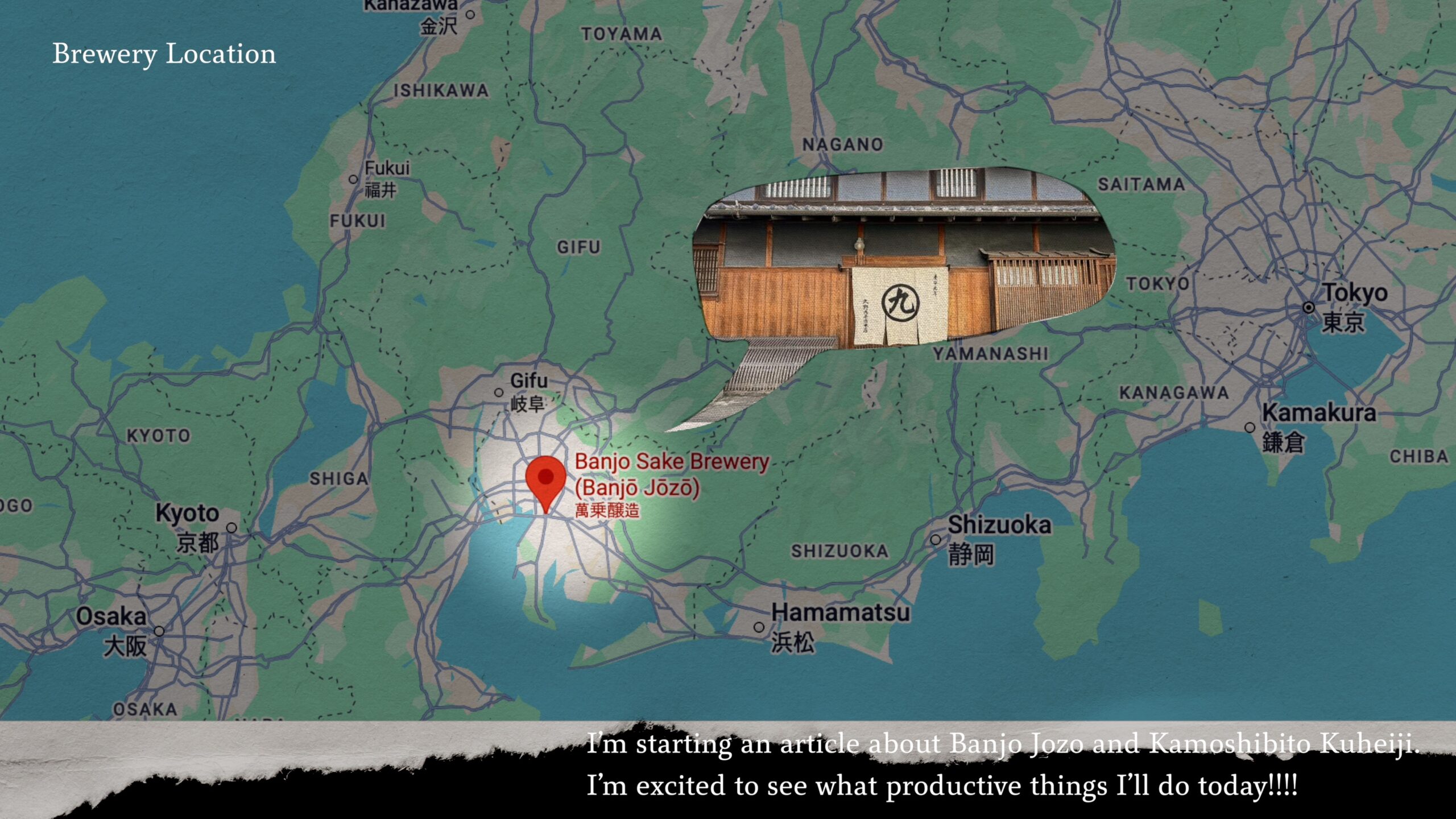
It is unclear whether sake brewing began at the time of its founding, but the profile of the current brewery owner, Mr. Kuheiji Kuno, states that the family has been brewing sake since the ninth generation.
Thus, from the ninth through the fourteenth generation of family heads, Banjo Jozo was not a nationally renowned brewery.
≫ About the Name “Kuheiji” (九平治)
“Kuheiji” is a name passed down to each family head who inherits the brewery.
Since the Kuno family has carried on the business, successive family heads have all been named Kuheiji Kuno, distinguished as the first generation, second generation, and so on.
In this article, “Kuheiji Kuno” generally refers to the current family head, the fifteenth-generation Mr. Kuheiji Kuno.
(The final character differs from “Kuheiji” as written in the sake’s name: 九平次.)
Around the 1970s, before Mr. Kuno took over the brewery, many sake breweries maintained a system of producing sake in bulk and supplying it to large companies. Banjo Jozo was one of them. This production method continued until the time Mr. Kuno became the fifteenth Kuheiji.
(Gakki Masamune in Fukushima Prefecture also brewed sake this way in the past.)
All the changes began after the fifteenth-generation family head, Mr. Kuheiji Kuno, joined the brewery.
Originally, Mr. Kuno had no intention of taking over the brewery and studied theatre after graduating from high school. However, his father’s sudden illness led him to join the brewery in 1993.
What puzzled Mr. Kuno upon joining was the brewery’s production method.
Sake consumption was declining nationwide, yet the brewery continued mass production with little regard for quality.
Looking at this situation, Mr. Kuheiji appears to have felt that this approach would inevitably leave sake losing ground to other alcoholic drinks, such as wine, whisky, and beer.
After inheriting the Kuheiji name and becoming the fifteenth-generation Kuheiji Kuno, he set about shifting production toward a focus on quality.
The first sake born from this newly established production system was Kamoshibito Kuheiji (醸し人九平次), introduced in 1997.
2. The Birth of Kamoshibito Kuheiji: Taking Steps Overseas
Among the stories Mr. Kuno later recalled in interviews are episodes from the United States and France.
(1) The United States: A City Where Everything Gets Mixed Together, After All?
In 1997, Kamoshibito Kuheiji was born—the first sake Mr. Kuheiji Kuno crafted under the quality-focused production system. By 2002, this approach had finally become firmly established, and the brewery began producing only ginjo and daiginjo sake.
Mr. Kuno’s next move was overseas.
In the early 2000s, domestic sake consumption was declining, while demand overseas was gradually growing.
Recognizing this trend, Mr. Kuno wanted to introduce his sake abroad. His first destination was the United States.
At the time, however, Mr. Kuno’s relationship with the American market did not last long. According to him, there was a difference in food culture.
When he introduced his sake to a sommelier in the United States and offered a tasting, the sommelier accepted a glass. Shortly after drinking it, the sommelier turned Mr. Kuno’s sake into a cocktail and handed it back to him.
Perhaps the American sommelier’s approach to sake did not align with Mr. Kuno’s own. Mr. Kuno left the United States and headed to Europe.
(2) France: Did the Masters of Their Craft Find Common Ground?
In 2006, Mr. Kuno headed to Paris, France.
Having come all the way to Paris, perhaps he wanted recognition from the very best restaurant, if he was going to earn it at all.
He visited Le Taillevent, a Parisian restaurant that had held three Michelin stars for 34 years.
He went there to dine as a regular guest. After finishing his meal, he approached the owner, Jean-Claude Vrinat, who was making his rounds greeting diners, shared his story, and offered him Kamoshibito Kuheiji.
Mr. Vrinat accepted the glass, took a sip, and asked Mr. Kuno to give him a moment—just as had happened in the United States.
As memories of the American encounter flashed through his mind and he anticipated the same outcome, what appeared in the sommelier’s hands was a lobster dish rather than a cocktail.
The sommelier then approached a regular customer seated in the restaurant, explained the lobster dish and Kamoshibito Kuheiji, and served them.
What came pouring out of the customer’s mouth was praise for the sake.
Mr. Vrinat, whom Mr. Kuno had asked to taste his sake, offered this comment:
“Wine can often be difficult to pair with certain dishes because of its aromas. This sake, however, does not get in the way of the food. With seafood in particular, it seems to pair even better than wine.”
During his time in France, Mr. Kuno also earned praise and secured contracts from many other chefs and sommeliers whom he invited to taste his sake, opening his eyes to the possibilities of overseas markets.
Miyamoto’s comment:
What if the sommelier Mr. Kuno met in the United States had suggested a way to complement American culture while preserving the sake’s character, rather than adapting it into a cocktail for the local market? It makes me wonder what Kamoshibito Kuheiji would look like today.
3. A Realization in France: Coming to Grow His Own Rice. Kurodasho(黒田庄)
While introducing sake in France, one of the things Mr. Kuno was frequently asked to explain was the rice.
Apparently, the French were more curious about the rice than about technical details such as brewing methods.
Grapes play an immensely important role in wine.
Sugar, acidity, tannins, and aromas—all are contained in the grapes, and the character of a wine changes depending on which grapes are used.
Even within the same variety, the balance of these components changes depending on which vineyard the grapes grew in, what the weather was like that year, and when they were harvested. For the people Mr. Kuno met, who worked in wine or were closely familiar with it, curiosity about rice, the raw ingredient of sake, may have been only natural.
As a sake brewer, Mr. Kuno had knowledge of rice as it related to brewing, so he had no trouble explaining it at the time.
But what mattered was that he knew it only as “knowledge,” without having experienced it firsthand.
This realization showed Mr. Kuno what his next step should be.
To grow the rice he would use himself.
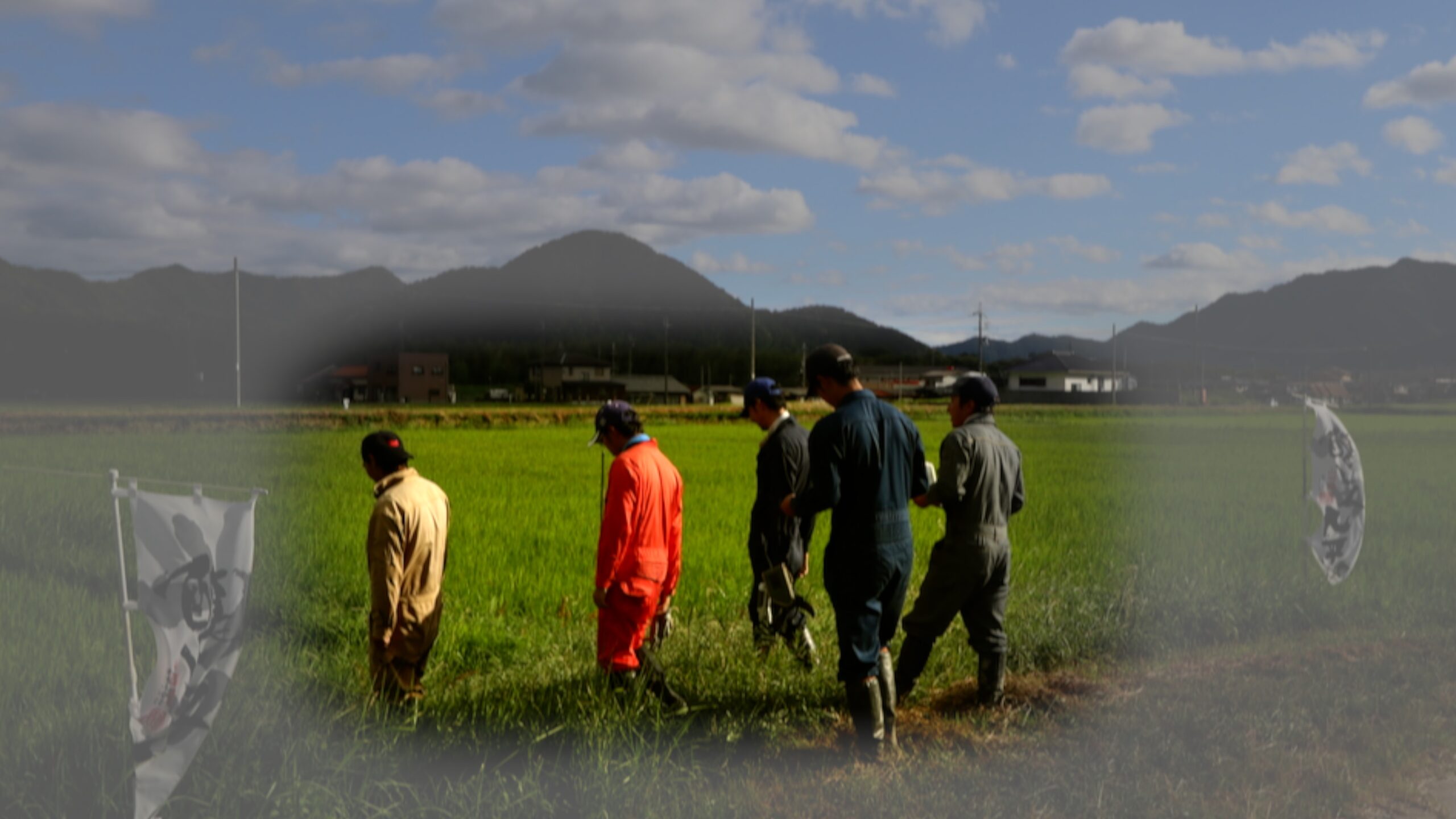
In 2010, Mr. Kuno began growing Yamada Nishiki rice in Kurodasho, Hyogo Prefecture. The following year, he released “Kurodasho ni Umarete” (黒田庄に生まれて), a sake made with the rice he had grown.
(The name means “Born in Kurodasho.”)
By growing rice himself, Mr. Kuno came to experience firsthand just how profoundly the changing climate and the accompanying changes in harvest yields could affect the rice.
One example comes from 2018, when a typhoon reduced the harvest by 20%.
That year, a typhoon struck while the rice plants were flowering, disrupting pollination and reducing the harvest by 20%. Despite being the same rice variety grown during the same period, the grains reportedly differed so much in hardness from those of other years that they almost seemed like a different rice altogether.
The sake produced that year is said to have had more body than in other years.
Miyamoto’s comment:
There really is a huge difference between knowing something in theory and experiencing it firsthand.
For example, I only managed to start my first relationship after becoming a university student,
yet even before that, I had given friends relationship advice time and time again…
And I’m certain there are plenty of people like me. (Please tell me there are.)
4. Mr. Kuno’s Much-Anticipated Next Step: Beginning to Make Wine
In 2013.
This was the year the starting gun was fired for what is now Kuheiji’s wine label, Domaine Kuheiji.
It was also when an indispensable collaborator entered Mr. Kuno’s story.
Hirotaka Ito (伊藤啓孝).
In France, the two visited wineries together and spent time meeting various people.
Through these experiences, they came to feel that wine was the benchmark for fermented alcoholic beverages on the world stage. As they spent time with various sommeliers, the two decided to make wine themselves.

(Mr. Ito, who had learned sake brewing under Mr. Kuno, was a veteran with 15 years of experience. Yet he headed to France for wine, becoming a beginner once again.)
And so, in 2013, Mr. Hirotaka Ito headed to France.
Since he had to start by learning French at a language school, he may have felt overwhelmed when he first arrived.
But tracing his steps reveals that he kept moving tirelessly, always with the goal of making wine in Burgundy.
At the time, speculative purchases of wineries were widespread in Burgundy, so an outsider could not simply buy a winery just because they had the money.
Mr. Ito spent years maintaining contact with local people and conveying his passion through his persistent determination to make wine.
It was not until 2015 that he was finally able to purchase a winery.
Then, in 2017, he bought a vineyard and began growing grapes.
In 2020, the first Domaine Kuheiji wine was released as a 2017 vintage.
Kuheiji’s wine range continued to grow over time. By 2021, the well-known wine retailer Enoteca was carrying 12 different wines from Domaine Kuheiji alone.
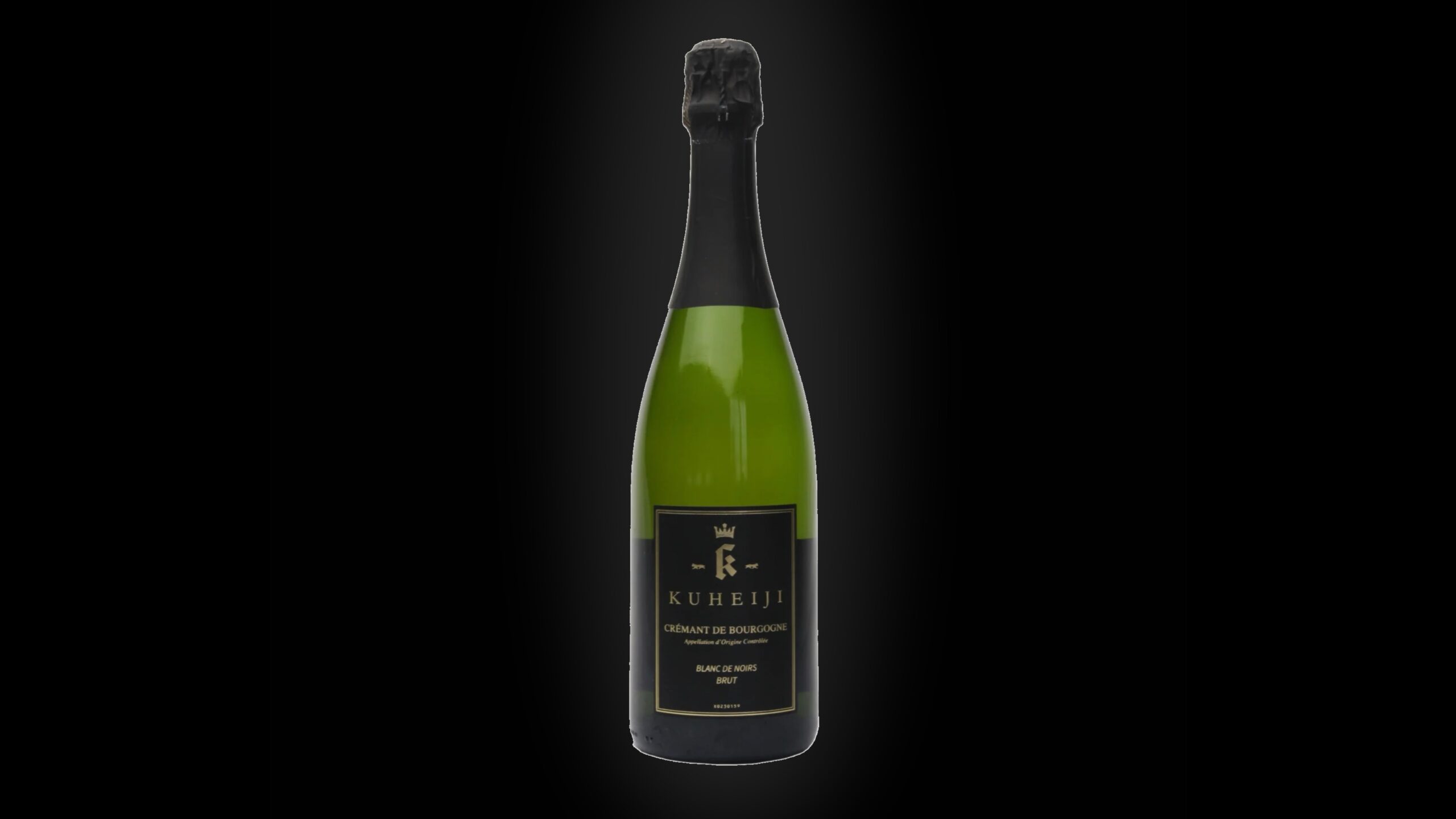
Through this process, Kuheiji’s own distinctive wines came into being, eventually allowing me to taste its sparkling wine, Crémant de Bourgogne, in 2026.
5. 2026. USA AGAIN
Kamoshibito Kuheiji and Domaine Kuheiji remain very popular in 2026, as I write this article.
Their sales figures aren’t public, so I can’t say for sure, but at least they’re very popular with me. Haha.
Also, around March 2026, KUHEIJI USA began its activities in earnest, targeting the American market.
This isn’t a venture into making new wines like Domaine Kuheiji. Still, by managing direct imports from the company and distribution, I imagine it will develop the American market with better quality and a wider range of offerings.
Someday, I’ll have the chance to live in the United States too. If I find myself drinking Kuheiji there while thinking back to this article, I’ll update it that very day.
Other Information
While researching, I was struck by how Mr. Ito’s approach to making wine overlaps with that of Luffy, the protagonist of One Piece.
Lately, my wife and I have been rewatching One Piece from the beginning whenever we eat, so that may have had more than a little influence.
Here is Mr. Ito’s thought process when making wine.
He pictures the wine he wants to make in his mind.
Then he creates the winemaking conditions needed to achieve that taste.
Meanwhile, Luffy first decides on the outcome—becoming King of the Pirates—and then chooses his actions and destinations accordingly.
Deciding on the outcome first, then acting to match it.
Personally, I think that’s something only truly cool people can do.
And…
Sakagura Miyamoto has also decided on its outcome: becoming the world’s most famous sake website and sake YouTube channel.
That’s what I spend my time working toward, day after day.
I hope I can soon see the world from the same perspective as Mr. Ito—and Luffy.